Arabic Translation and Interpreting FAQ for Austria
 Arabic ↔ German
 Arabic ↔ English
Everything you need to know about certified Arabic German translations, interpreting assignments in Vienna and Graz, remote interpreting, prices, delivery and confidentiality, in one place.
Your contact
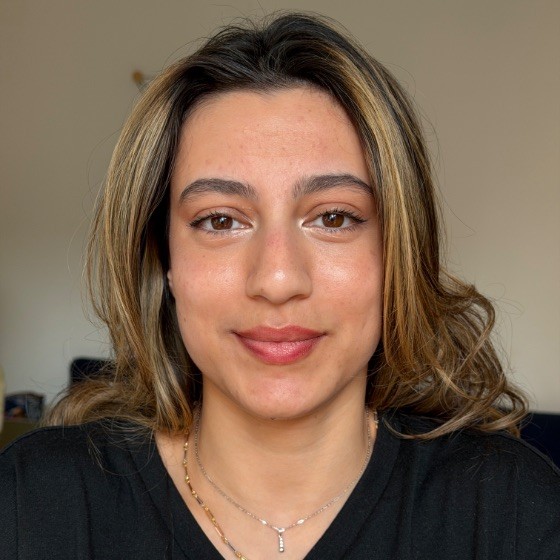
Aliaa Azzouqa, MA
azzouqa@fachdolmetscher.atI answer every enquiry personally and know the questions that authorities, law firms, hospitals and private clients ask most often.
Arabic translation FAQ for Austria
This page collects the answers we give most often: on certified Arabic German translation, on prices and turnaround, on booking an interpreter for appointments in Vienna, Graz or by video, and on how we handle your data.
The answers describe common practice in Austria. Individual authorities may have their own requirements, so when in doubt we recommend a quick check with the office that will receive your document. If your question is missing, simply write to us.
Certified Arabic German translations
In Austria a certified translation is produced by court sworn and certified translators (allgemein beeidete und gerichtlich zertifizierte Übersetzerinnen und Übersetzer). It carries a stamp, a signature and a certification clause and is accepted by authorities, courts, universities and employers.
A clearly legible scan or photo is enough to get started. We usually do not need the original, although some offices require the translation to be physically attached to a copy or to the original. It is best to check this with the receiving office in advance.
- Certified translations issued in Austria are accepted throughout the country; for use abroad an additional apostille or legalisation may be required.
- Names are spelt exactly as in your passport, so please tell us the spelling you need.
- Stamps, seals and handwritten notes on the original are described and translated as part of the document.
- Existing translations are checked in full before certification; we confirm effort and feasibility after reviewing them.
Prices and payment
We do not quote flat rates. Prices follow a review of the document or of the assignment brief, and you usually receive an individual quote with a fixed price and delivery date within a few hours.
For translations the price depends on document type, length, legibility and urgency. For interpreting it depends on duration, location, subject area and preparation time.
- The quote is binding; there are no additional charges as long as the assignment does not change.
- Express delivery is available on request and is shown separately in the quote.
- Payment is by bank transfer; institutions and companies receive a proper invoice.
- Framework agreements are available on request for recurring work, for example from law firms or institutions.
Delivery and collection
Standard documents of one to five pages are usually ready within one to three working days. Long contracts, expert opinions or medical reports take longer; the exact date is stated in the quote.
On request you receive the certified translation as a PDF first. The original with stamp and signature is sent by post or can be collected at Wagramer Straße 2, 1220 Vienna.
- Postal delivery within Austria is standard; international shipping is available on request.
- A PDF is sufficient for many preliminary checks, but authorities usually require the original.
- Additional certified copies can be ordered at the same time, which saves time later.
- For collection we agree a time so that your document is ready and waiting.
Booking an interpreter
For on-site appointments in Vienna, Graz and across Austria, please enquire at least 48 hours in advance where possible. Tell us the date, time, location, expected duration and subject, and you will receive a prompt confirmation and quote.
Depending on the setting we interpret consecutively, simultaneously or in whispered mode. Consecutive interpreting is standard for official appointments, medical consultations and counselling; simultaneous or whispered interpreting is used for conferences and delegations.
- Documents relating to the appointment, such as a summons, medical reports or an agenda, help with preparation and are treated confidentially.
- Cancellation terms are stated in the quote; we handle short notice changes as flexibly as we can.
- Court hearings follow their own rules on appointing interpreters; ask us and we will explain the procedure.
Remote interpreting by video and telephone
Remote interpreting is the fastest option when a conversation is needed at short notice or outside Vienna and Graz. We work with Zoom, Microsoft Teams and other common platforms, and you do not need any software of your own.
Typical assignments are medical and official appointments, counselling sessions, business meetings and hospital consultations. Remote appointments are often possible on the same day.
- A dial-in link or a conference call is all it takes; we handle the connection.
- For good quality you only need a stable connection and a quiet room on your side.
- Where documents are signed or identities are verified, for example at a notary, an on-site appointment is usually the better choice.
Confidentiality and data protection
All documents and conversations are treated in strict confidence. Processing is GDPR compliant, and files are kept only as long as the assignment and statutory retention rules require.
For particularly sensitive work, for example in law firms, clinics or companies, we sign a non-disclosure agreement on request.
- Sending files by e-mail or through the form is standard; encrypted channels are available on request.
- Interpreters are bound by professional secrecy, which also covers preliminary talks and documents.
- On request we delete your files once the assignment is complete and confirm this in writing.
Languages and dialects
I work in Arabic, German and English in all combinations. As a native Arabic speaker with Modern Standard Arabic and Levantine dialect competence, I interpret in practice for speakers of all Arabic dialects.
Written documents are almost always in Modern Standard Arabic, whichever country they come from. When interpreting I adapt to the dialect of the people in the room, from Syria and Iraq through Egypt to the Maghreb and the Gulf states.
- Documents from every Arabic speaking country are translated, including country specific forms and stamps.
- Specialist terminology from law, medicine, administration and business is prepared in advance.
- Arabic English translations are also available, including for submissions abroad.
Trusted by leading organizations








Request a Quote
Describe your project and we’ll get back to you with a quote, usually within a few hours.
The key questions at a glance
Eight answers that apply to almost every enquiry.
A standard translation conveys the content without official confirmation and is suitable for internal use, websites or correspondence. A certified translation is confirmed with stamp and signature by court sworn and certified translators and is intended for authorities, courts and universities.
Standard documents of one to five pages are usually ready within one to three working days. Longer texts take correspondingly longer, and your quote states the binding delivery date. Express delivery is available on request.
For on-site appointments we ask for 48 hours notice where possible so that preparation and travel are covered. Remote interpreting by video or telephone is often available on the same day. If in doubt, just ask and we will tell you straight away what is possible.
All documents are processed in strict confidence and in line with the GDPR, used only for the assignment and never passed on to third parties. On request we sign a non-disclosure agreement and delete the files once the work is complete.
In most cases a clearly legible scan or photo showing all stamps and marginal notes is sufficient for the quote and the translation. Whether the translation has to be attached to the original depends on the receiving office, so check with them if in doubt.
Send us the document as a scan or photo through the form or by e-mail; for interpreting, the date, location, duration and subject are enough. You usually receive an individual quote with a fixed price within a few hours.
Yes. Certified translations by court sworn and certified translators are accepted by authorities, courts, universities and employers across Austria. For use abroad an additional apostille or legalisation may be required.
Yes. I am a native speaker with Modern Standard Arabic and Levantine dialect competence and interpret in practice for speakers from every Arabic speaking country, from the Maghreb to the Gulf states. Written documents are almost always in Modern Standard Arabic anyway.
More questions? Write to us.
Send enquiry